
Bacon/Giacometti
"It is not madness we need fear, but prostitution."

How is this for a synchronicity? A few days ago I quoted Genet on Giacometti and flirted with the idea of philosophical slash fiction1 and then I came across this slim little volume in an artsy little coffee shop on Fish Island:
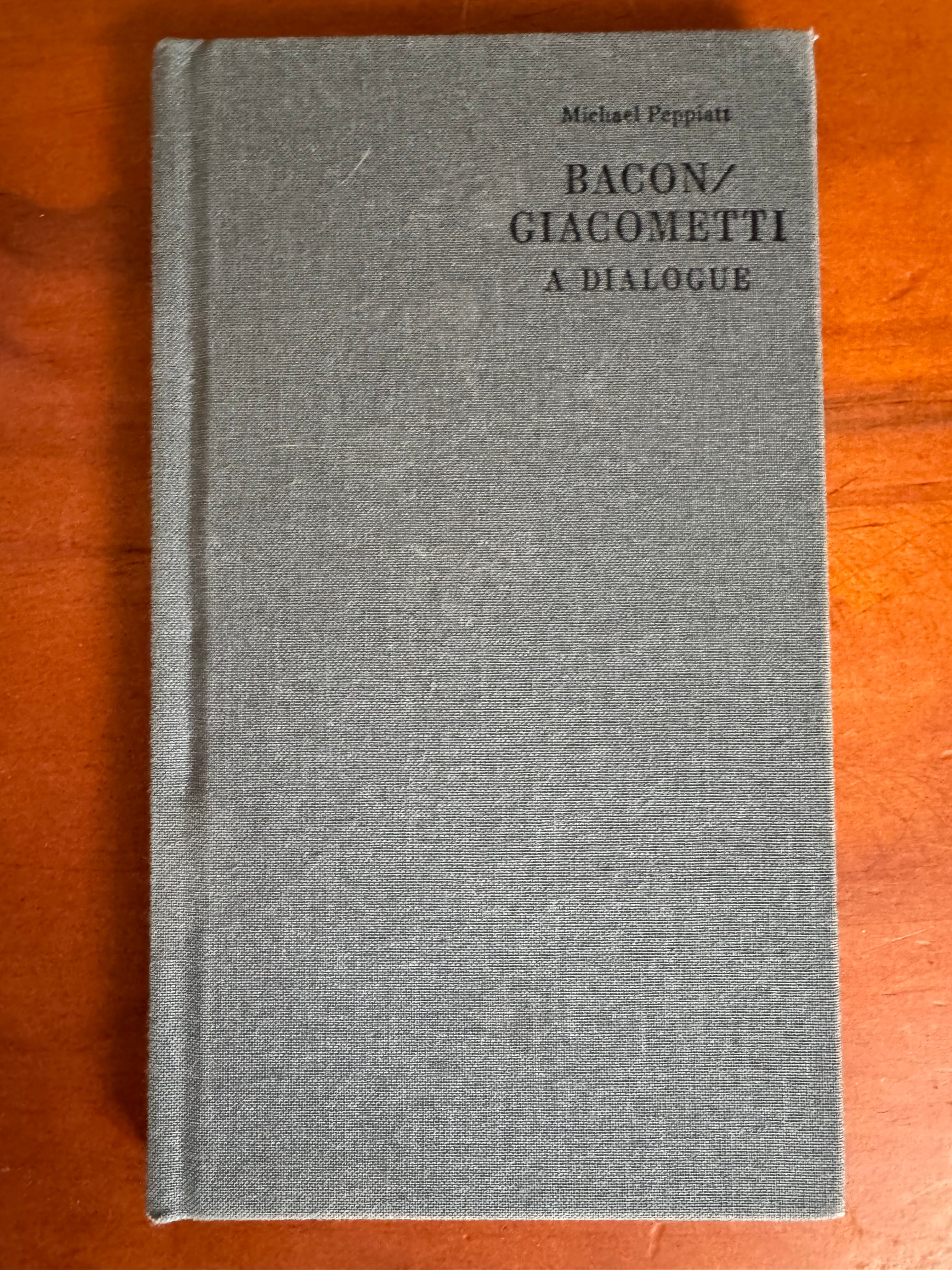
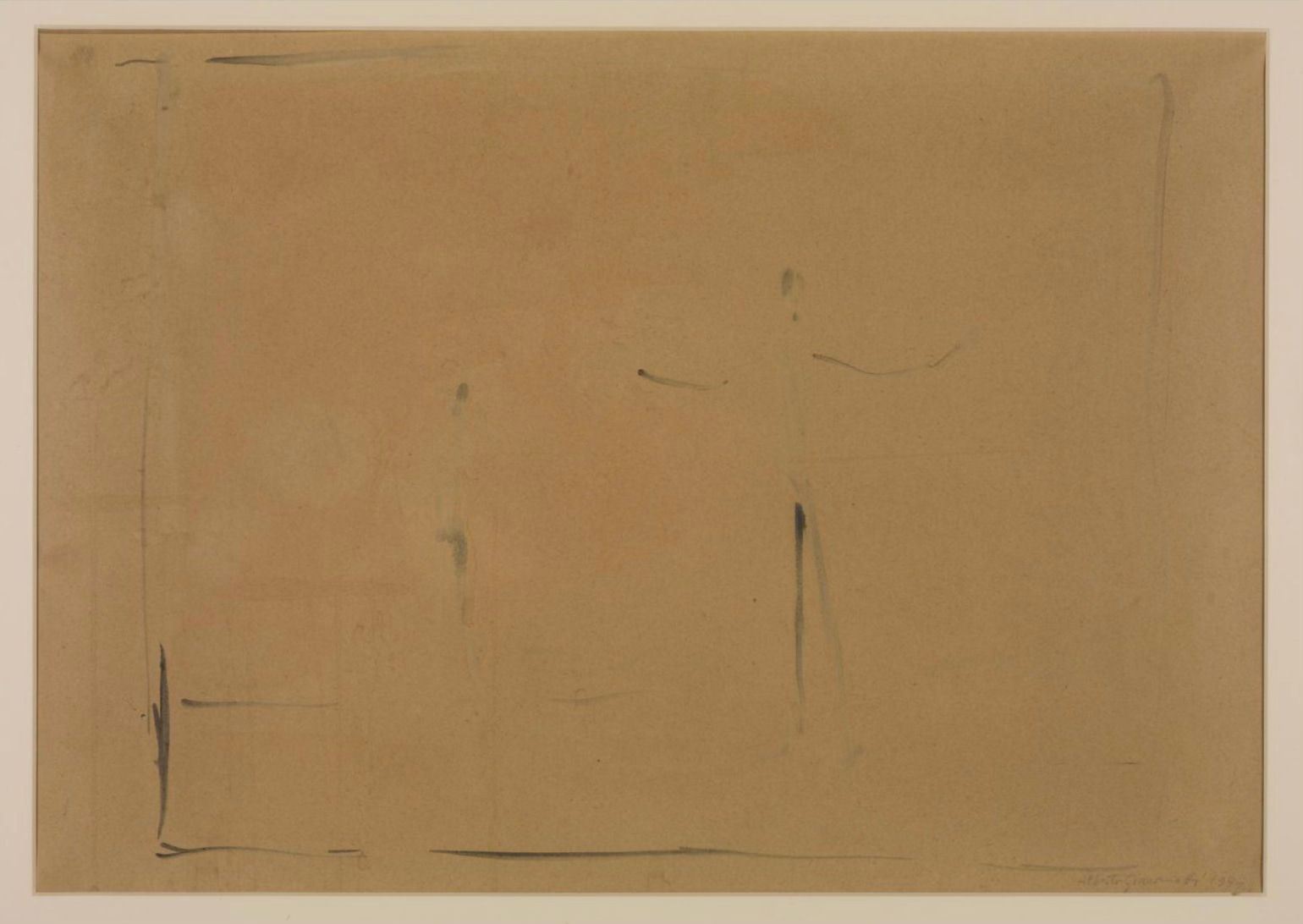
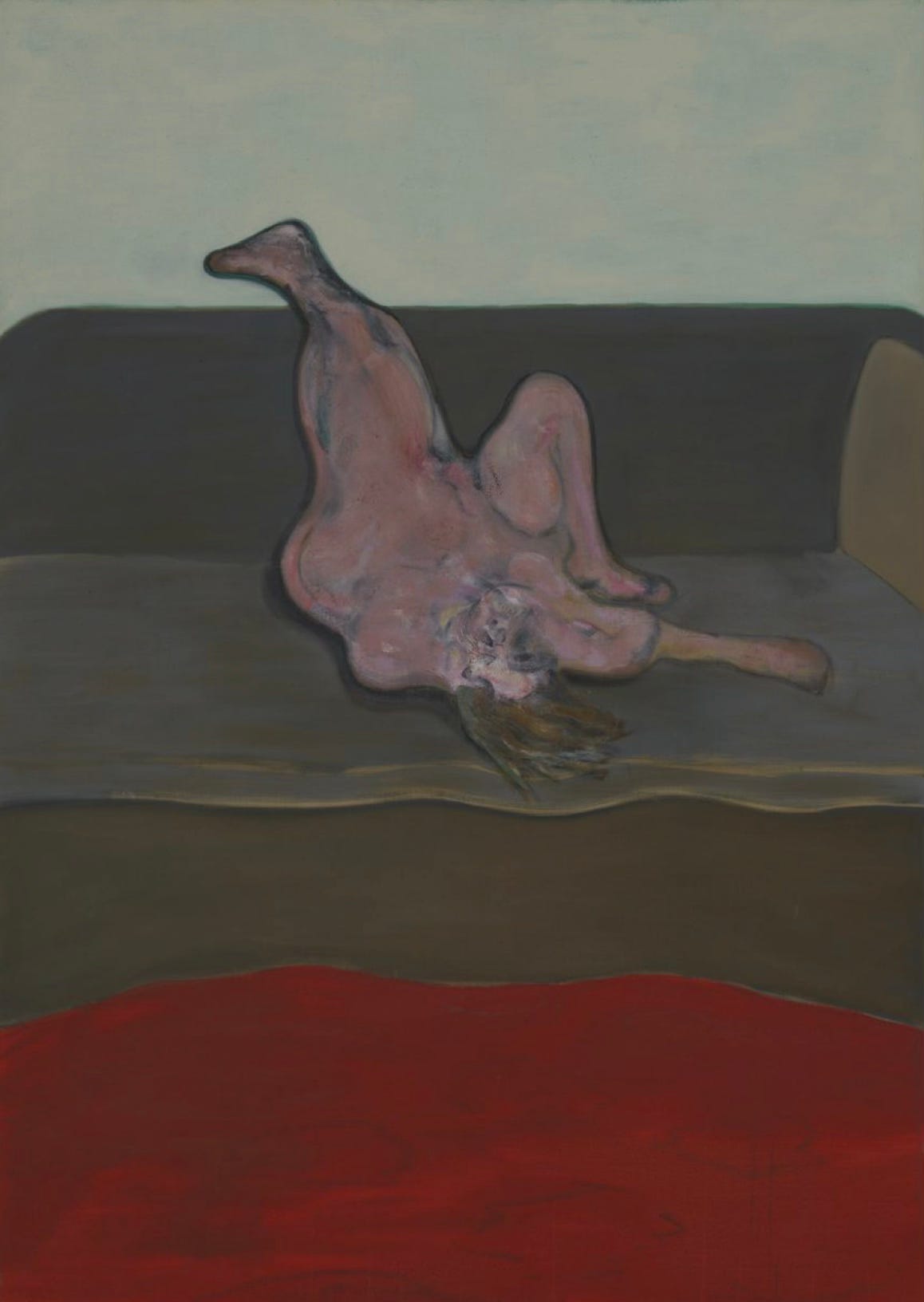
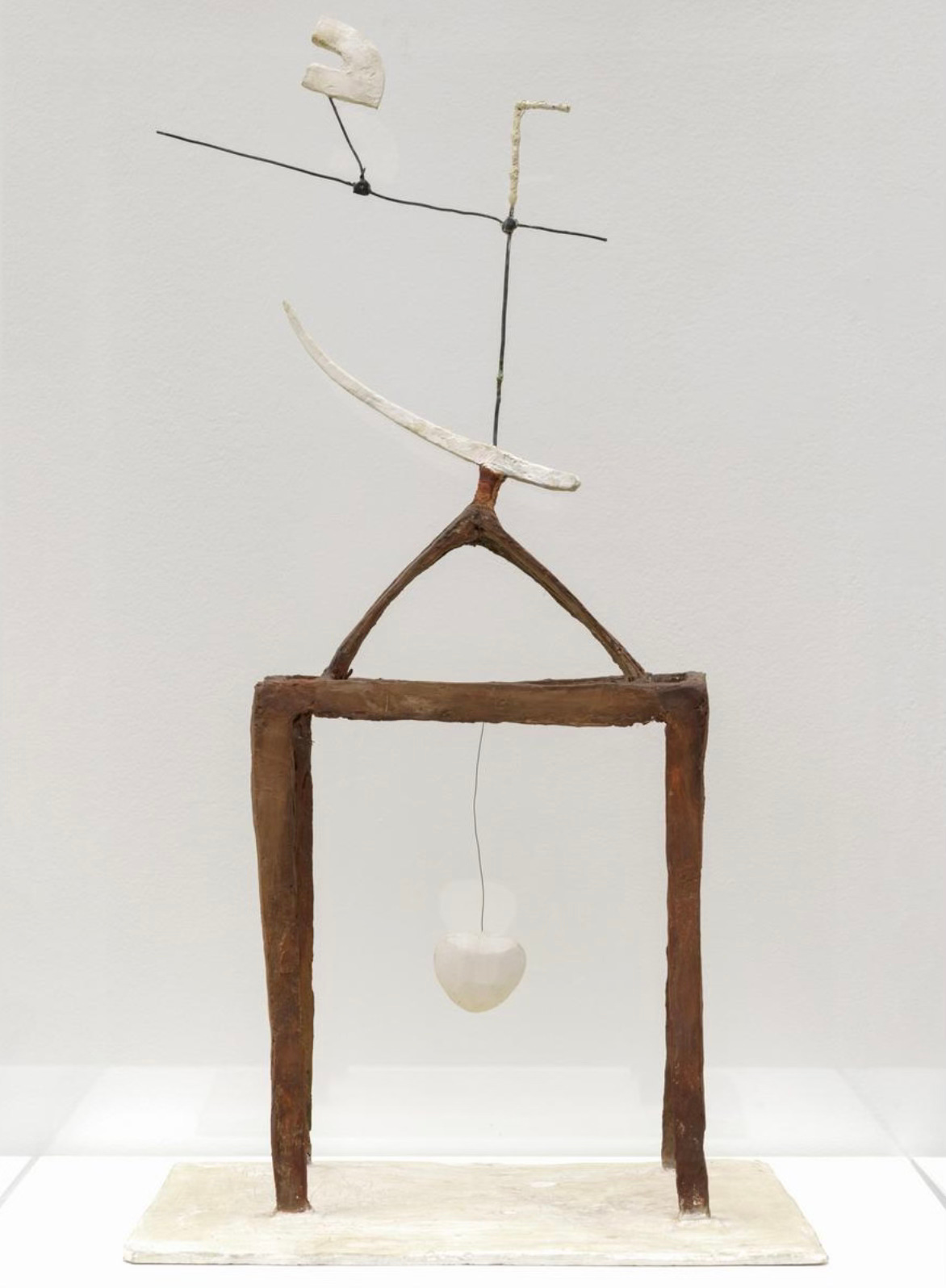
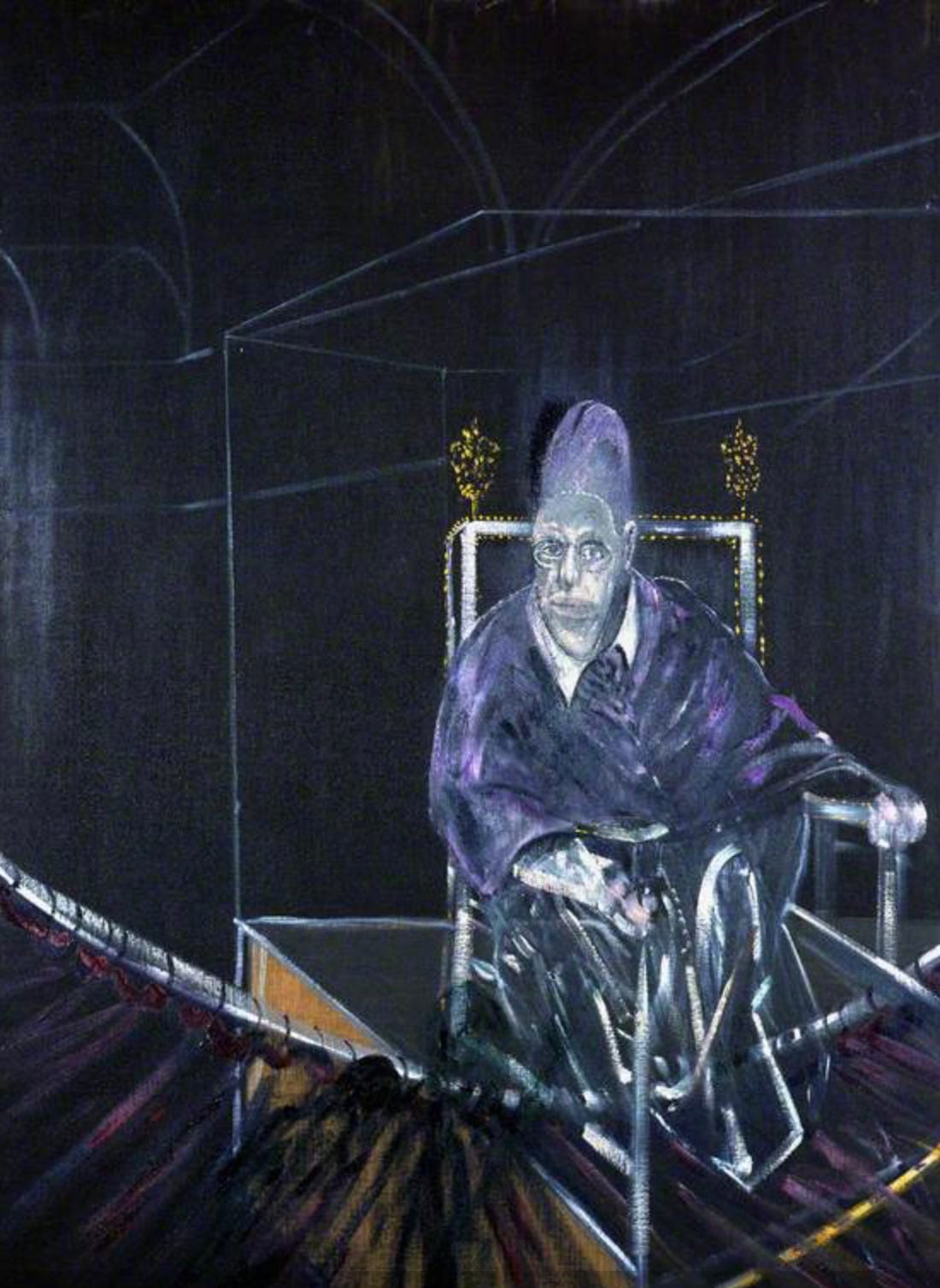
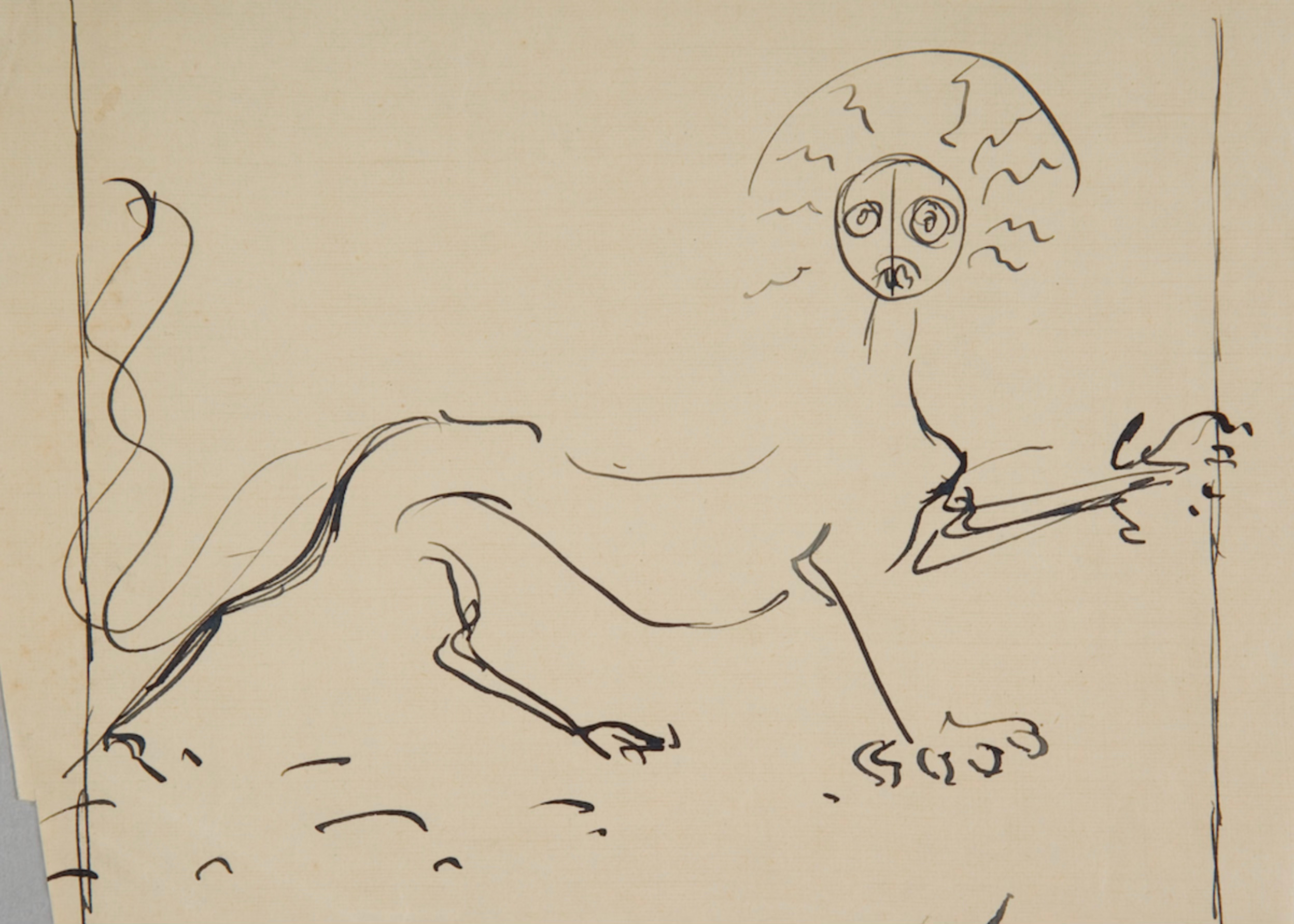
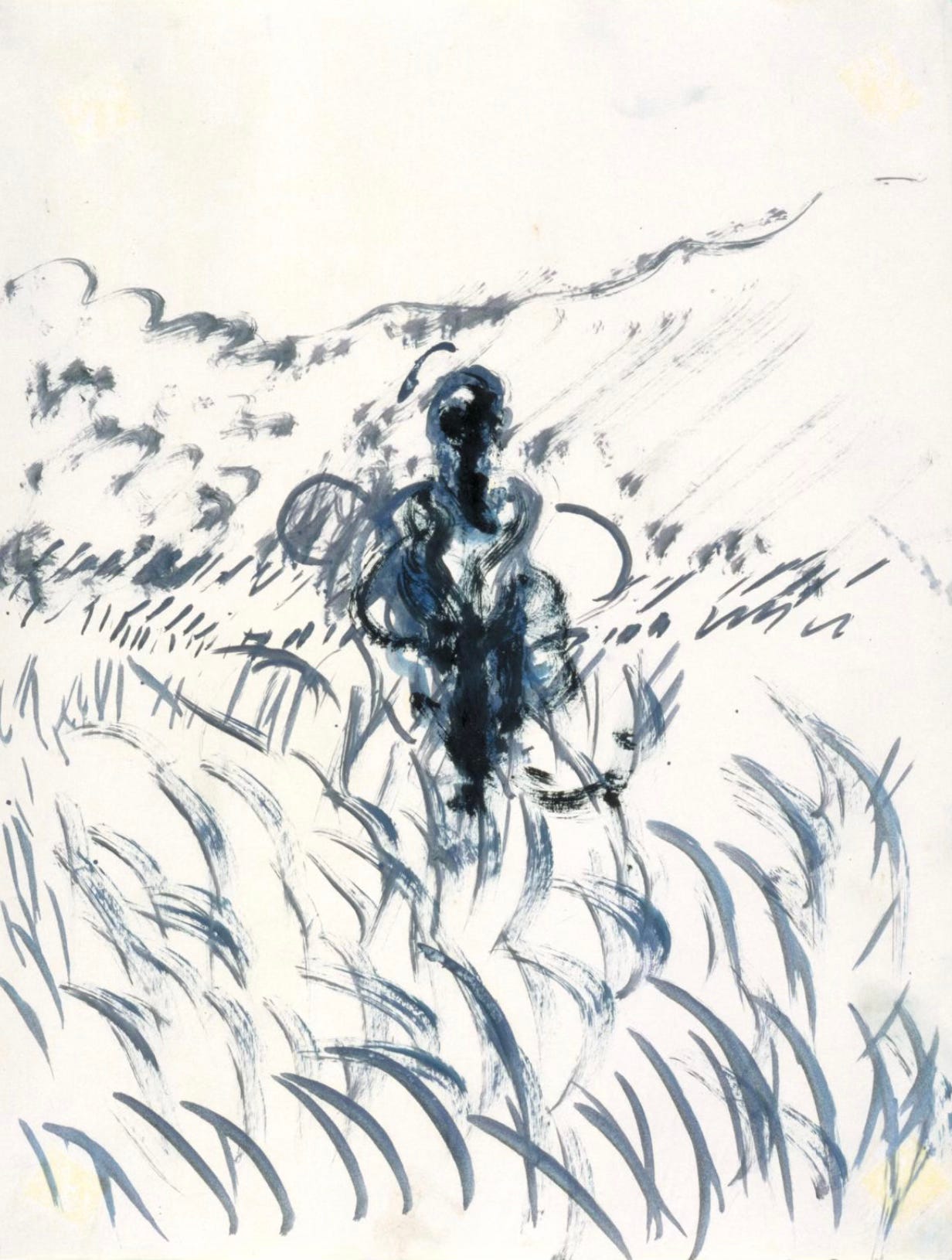
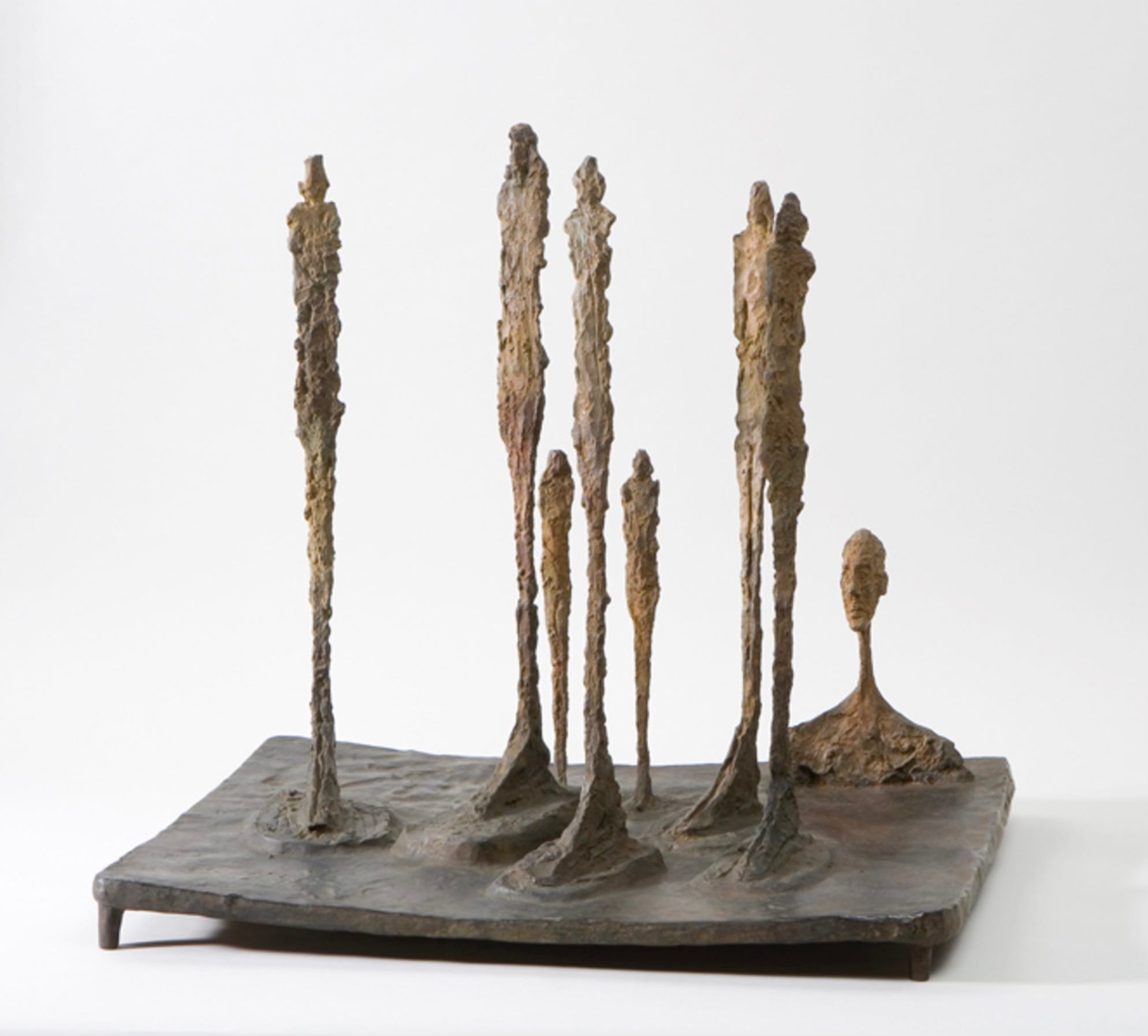
Bacon met Giacometti in London in 1965, in the last year of the Swiss artist’s life, through a mutual friend Isabel Nicholas (aka Isabel Delmer, Isabel Lambert and Isabel Rawsthorne) who had modelled for both. Below I reproduce extracts of Peppiatt’s imagined dialogue together with a personal selection of their work:
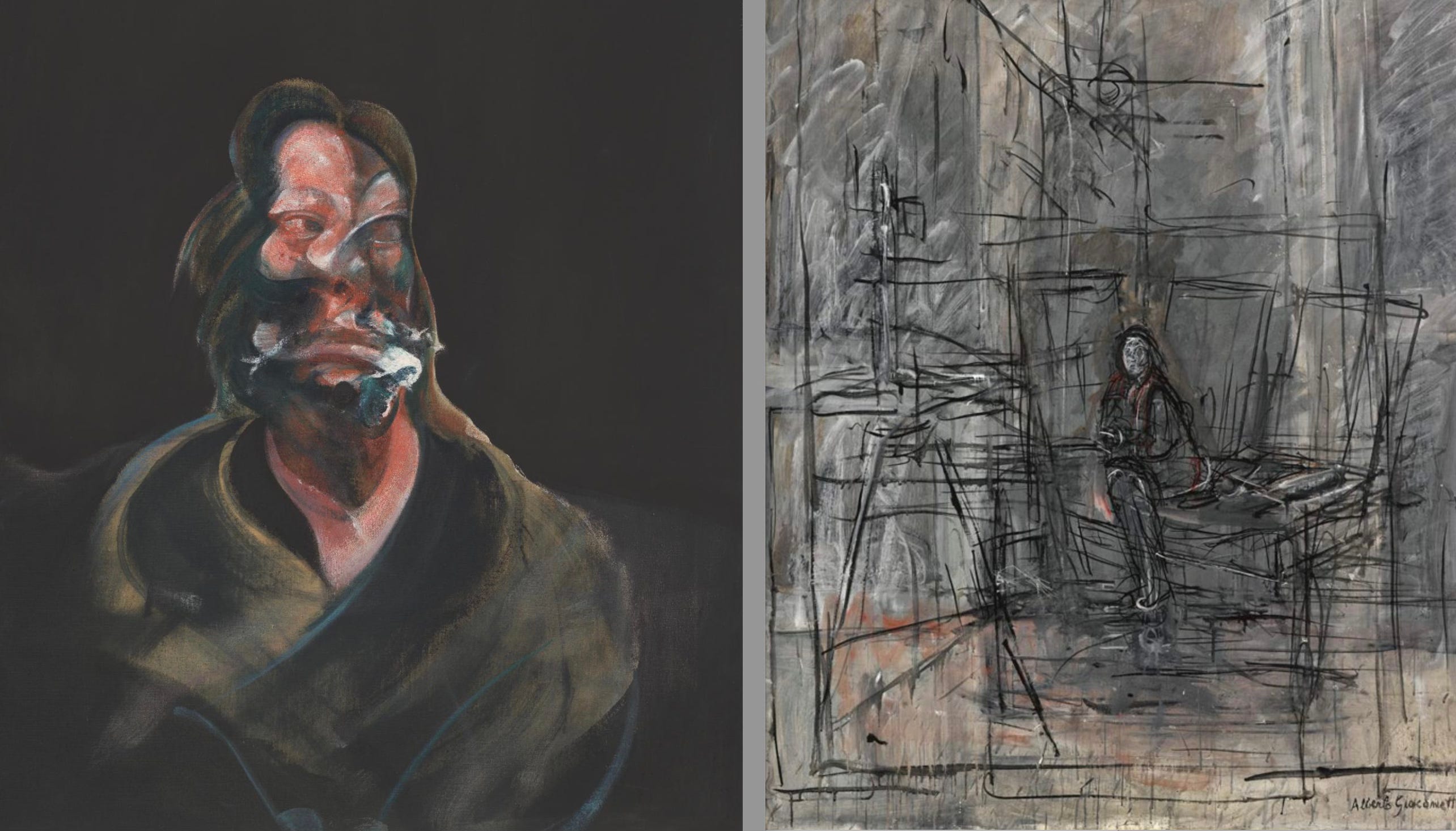
Giacometti:
Ever since I was child, drawing has always been the basis of everything I do. I draw to try to understand what I’m looking at, do you see, to understand the world around me, even though when I’m drawing I often feel like a man groping his way through the dark. For me it’s the only way I can grasp what’s in front of me, even if it’s a glass on a table like this one, or the nose on someone’s face. It sounds odd to say that even now I can’t really draw a nose, but it’s true. When I look at it, when Diego or Annette is sitting there in front of me, their nose just seems to dissolve, or to become so enormous and strange, like a pyramid, that I don’t even know where to begin. After all these years, I still can’t draw a nose!
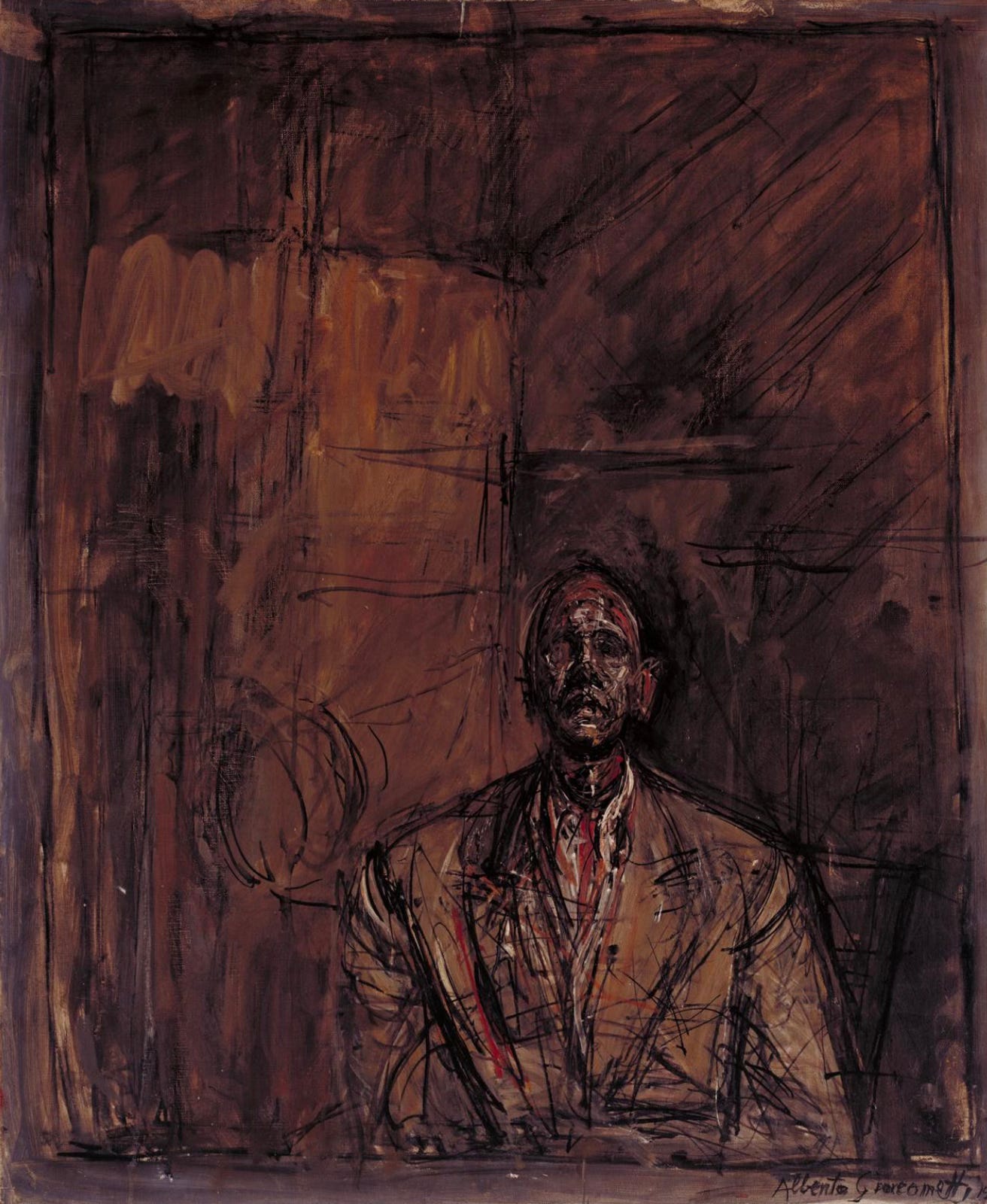
Bacon:
In a way we all live screened existences, and when people complain, as they do, that my paintings are violent, I think it’s merely that I’ve been able to clear a few of those screens away and show life as it is. After all, you can’t be more violent than life itself.
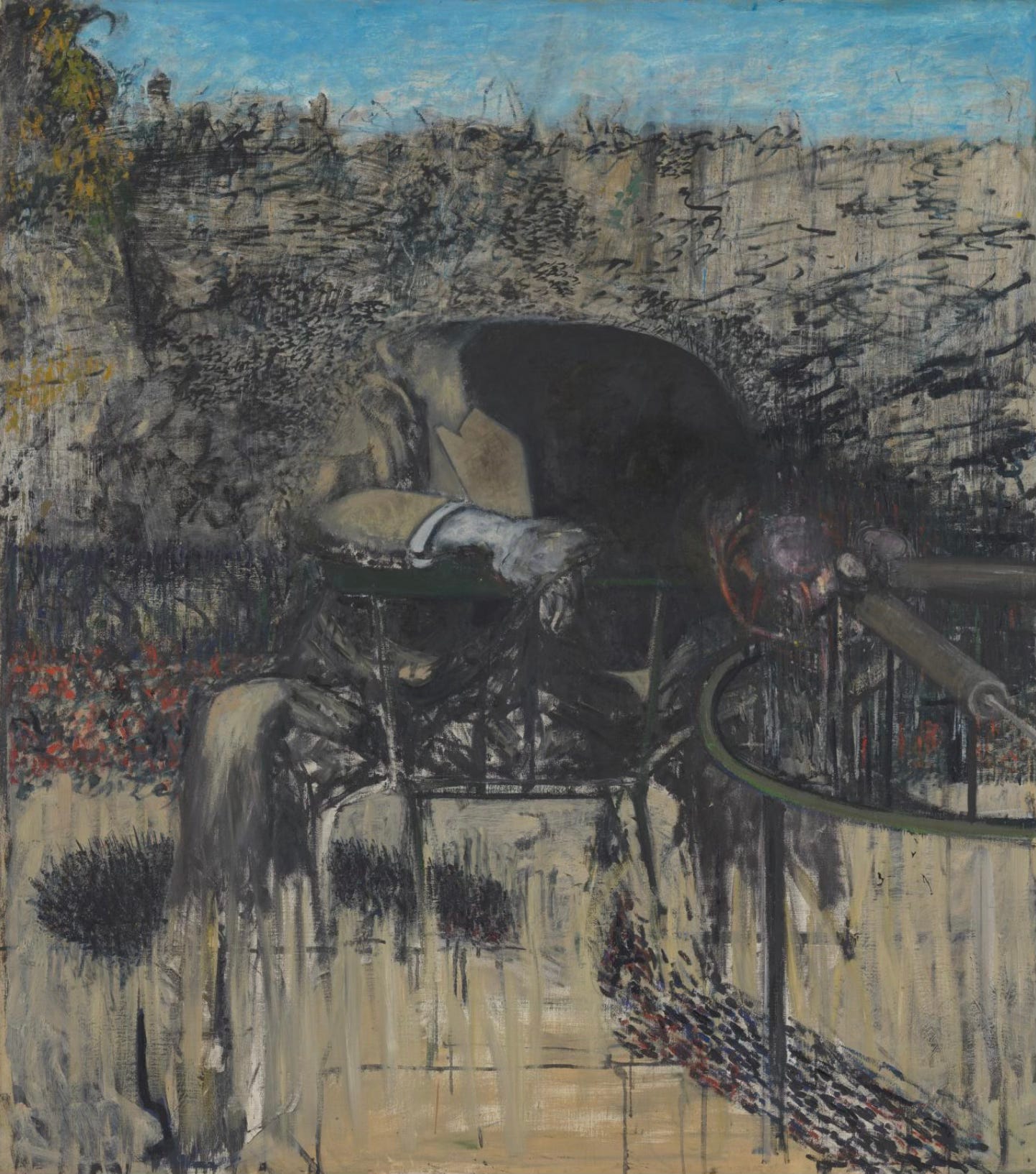
Giacometti:
You talk as if you once believed — perhaps as a child — that life had a meaning and then you were disappointed when you found out that it didn’t. I think I’ve always remained a child. I think I haven’t really changed much since I was a boy of about twelve. But somehow I never expected anything. I was too obsessed with trying to understand what I saw immediately around me to search for any other meaning. But now I really hate it when I’m called an Existentialist, as if I belonged to some philosophical school. I don’t belong to anything. I barely belong to myself. I’m just trying to understand. No? I mean, people talk about Existentialism as if it’s something completely new and people hadn’t lived in doubt and anxiety before. It’s ridiculous. People have always lived in doubt and anxiety right through history.2
Bacon:
It’s the same thing for me, you know. People keep saying that I’m an Expressionist, whatever that means. But I’m not. After all, I’ve got nothing to express. In fact, I loathe Expressionism with all its ghastly loose puddles of paint! I actually think-if I think about those things at all — that I’m a realist.
Giacometti:
So, since I was in contact with the Surrealists the whole time, I absorbed a lot of their ideas, and I started doing a completely new kind of sculpture, full of wild fantasies and sly references. I was showing off, proving that I could do things that were just as weird and perhaps even weirder than any that the others had done. And this went on for several years until I eventually realised I’d been on the wrong path and none of it was making any sense. It was no more than masturbation, and I needed to get back to working from life, from a model. Of course, Breton didn’t like that at all — ‘anybody can draw a head’ he said — and one day he and some of the others lured me into a meeting and formally kicked me out of the movement. The Pope of Surrealism excommunicated me!
Bacon:
For some reason I hardly ever seem to meet people I can really talk to. I suppose it’s partly because I find so many of what’s called ‘intellectuals’ so boring, and then with my sort of gilded gutter life, going from bar to bar, person to person, I rarely meet really intelligent people. I meet drunks mostly, and people who are in despair.
Giacometti:
Do you know, when I’m in London, I always feel homosexual! You must take me some time to what you call your queer clubs. I’d like to see what goes on there. I love places where people go for sex because they have a special atmosphere. We had the famous Sphinx’ club in Paris, where I often went at the end of the evening because I knew quite a few of the girls there, and I could simply sit there and watch them, which I loved, and make drawings of them because they had this extraordinary presence as they stood around there, like these incredible goddesses. They were perfectly happy if you bought them a few drinks. Even if you wanted something more than that, you just paid them what they asked for and they didn’t care whether you managed to do it or not. And that was the end of it.3
Bacon:
But then of course, once you get to know them, most men are weak, unfortunately.
Giacometti:
We are all weak, Francis. Man is a kind of aberration, especially if you compare him to something like the trees that are all around us. Recently I’ve been drawing trees for a book about Paris, a book called Paris Without End that Tériade wants to publish, and I’m struck by how self-contained and majestic they are. I only need to see one tree, that’s quite enough. Already two trees are too much, so now I would never take a walk in the forest because it would be too much, too overwhelming.
After a vigorous day of manly hill walking, a simple campfire-cooked supper and a few tots of whiskey from a distillery on the way (when in Rome etc.), the two friends were in high spirits. They talked about deep, philsosphical things and sang songs they remembered from childhood. After a pregnant silence, David got a naughty glimmer in his eye.
‘My dear Adam, I hope this is not too intrusive a question, but I’m curious, do you ever think of a woman when you do it?’
‘When I do what, my dear David?’
‘When you... you know, take care of… business’
‘What kind of business?’
‘Business of the… eh… carnal variety’
‘Like a visit to the meat market?’
‘Goodness gracious, my dear Adam, I did not have you down as one of those…’
‘My dear David, I have no idea where this conversation is going, but I suspect it is nowhere proper. So I suggest, for your honour and mine, that we retire for the night. Just because we are away from the prying eyes of our fellow burghers does free us to disappoint the Impartial Spectator. Bonne nuit, mon amour!’
We are less likely to be tempted by solitude into Promethean pride: we are far more likely to become cowards in the face of the tyrant who would compel us to lie in the service of the False City. It is not madness we need fear, but prostitution.
W.H. Auden The Enchafèd Flood (1950) quoted by Judith Shklar in After Utopia (1957), a prescient take on the new Romanticism.
I have tried to be kink positive, but I cannot help but dismiss heteropessimist torture porn as a self-flattering misreading of man’s essential indifference towards (wo)man.