
Mere life
Recollections of India (III)

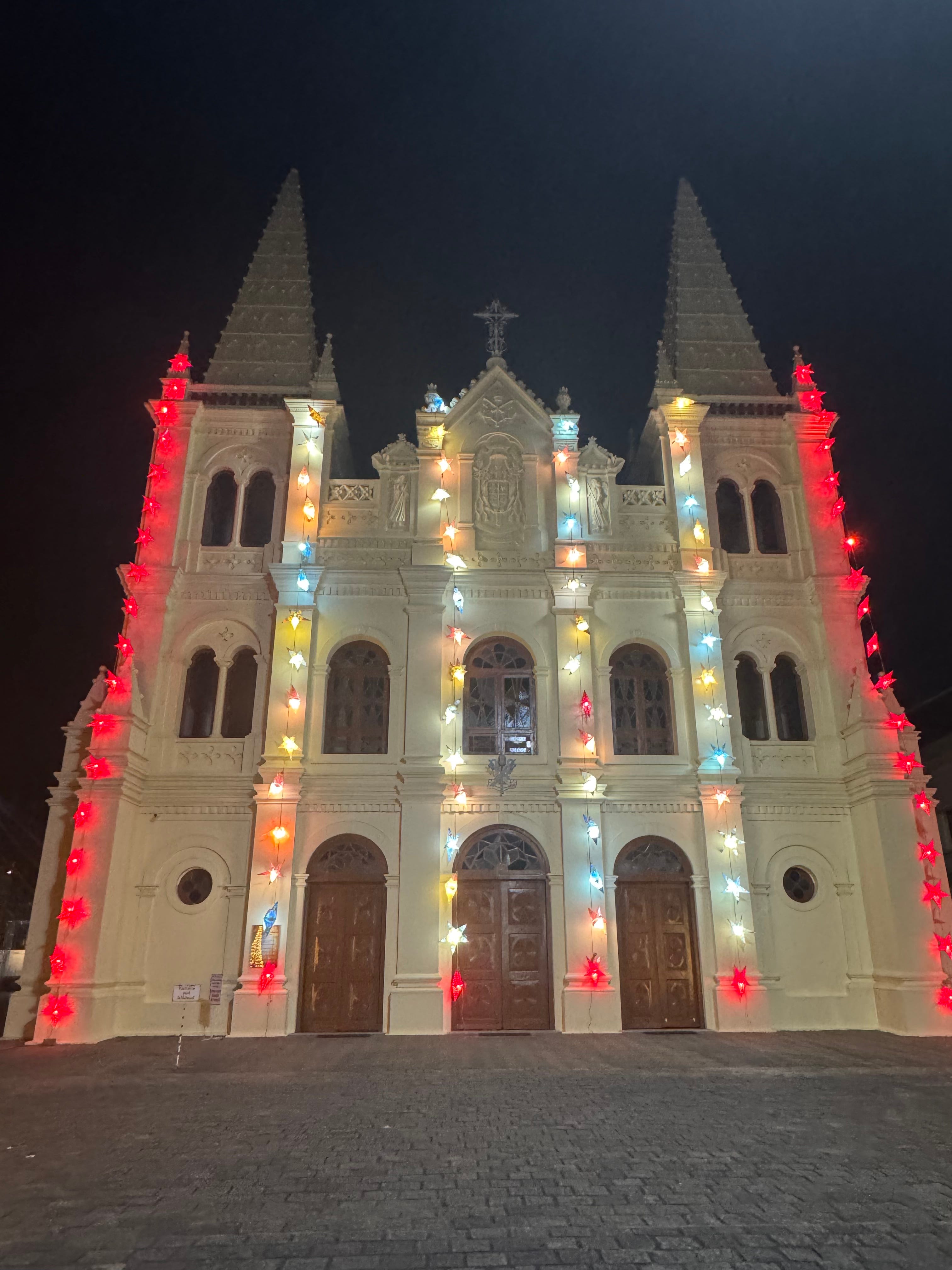
According to legend, St. Thomas brought Christianity to the Malabar Coast in 60 AD.
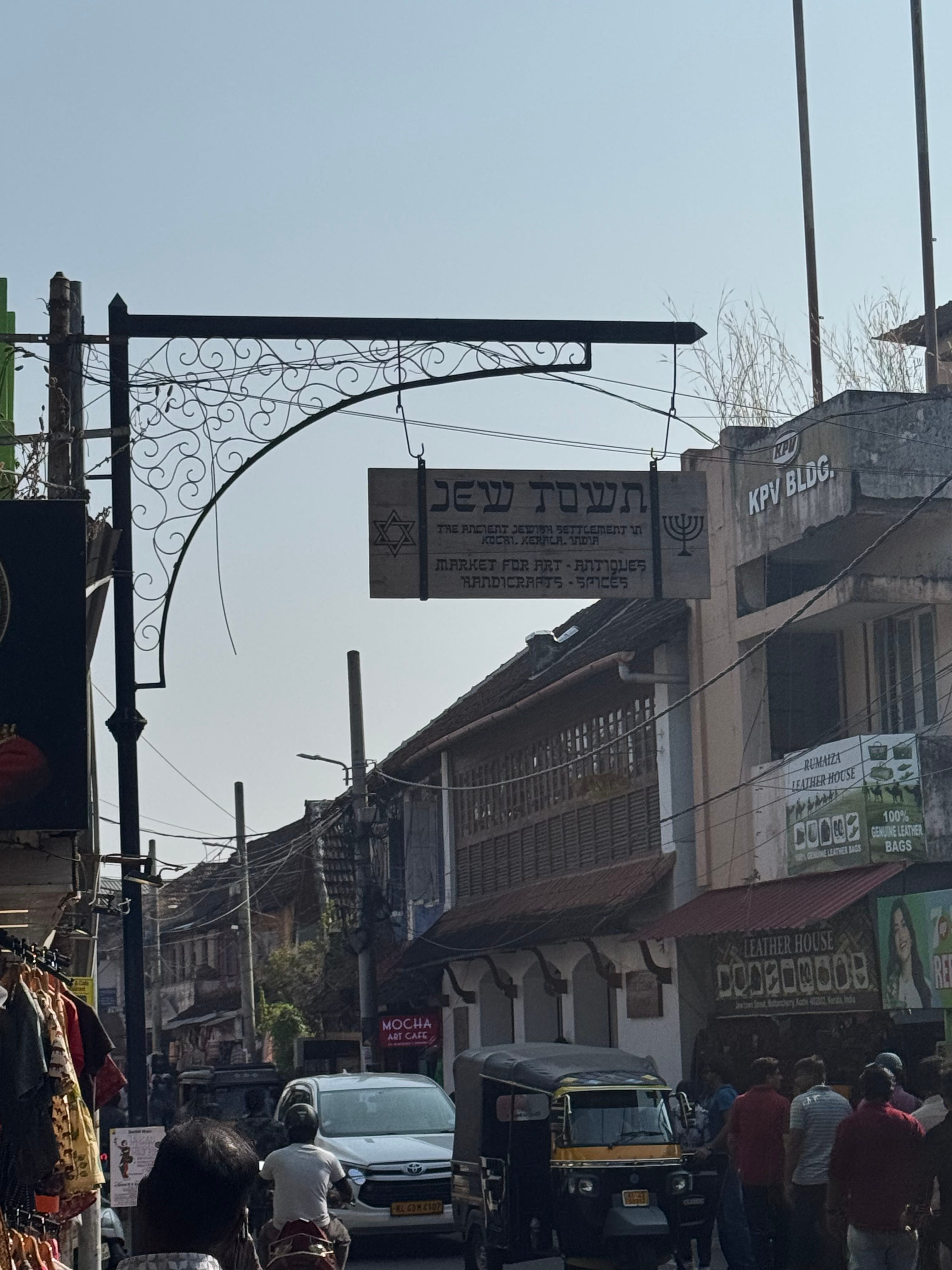
The Jews arrived shortly afterwards, following the destruction of the Second Temple in Jerusalem, or so we were told at the well-maintained synagogue in Kochi in what is still called “Jew Town” even though all the remaining Jews had left in 1950 for Israel. Local tourists queued to take photos next to a giant green Star of David.
There was no indigenous history of Brahminism in what is now the state of Kerala until the aristocracy invited Brahmin priests from Tamil Nadu from the 6th century onwards. Before that, the Dravidian population worshipped forest spirits and there were sprinklings of Buddhists and Jains in addition to the St. Thomas Christians and the Jews of Cochin. The Brahmins grew wealthy from their tax-free land and consolidated their power by promoting a form of Hinduism which heavily emphasised concepts of purity and pollution, resulting in one of the most brutal caste systems in India.1 St. Thomas Christians were incorporated into this system as the equivalent of higher-caste Hindus. Muslim communities, founded by Arab traders marrying local women, were considered outside the caste system, but were protected by the secular authorities because of their importance to maritime trade.
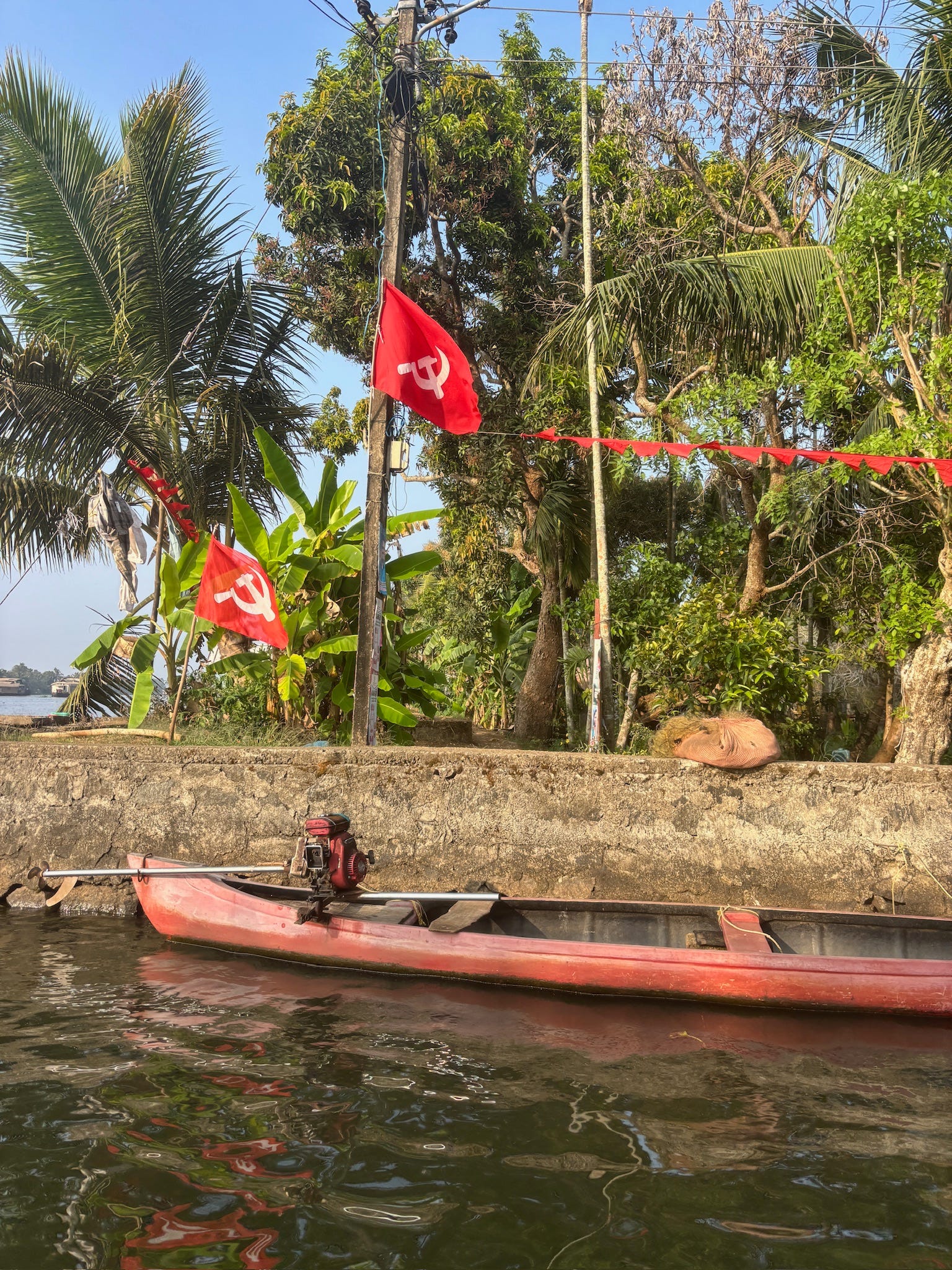
We boarded a houseboat near Alappuzha. The little villages adjoining lake Vembanad offered various activities for our amusement. I got an ayurvedic massage from a young man. (In India, physical contact between men isn’t automatically associated with homoeroticism: it’s still common to see teenage boys holding hands.) It was humbling to afterward wash myself from a bucket, like my mother did as a child when visiting the great-grandparents I never knew. Z bought two mud crabs for his dinner. (I remained stubbornly attached to my quasi-Brahminical vegetarianism). We took a small boat ride through little rivulets bordered by colourful houses (many newly built after a flood in 2018) and decorated with cheerful communist iconography. Potemkim-in-the-tropics, if you wish.2
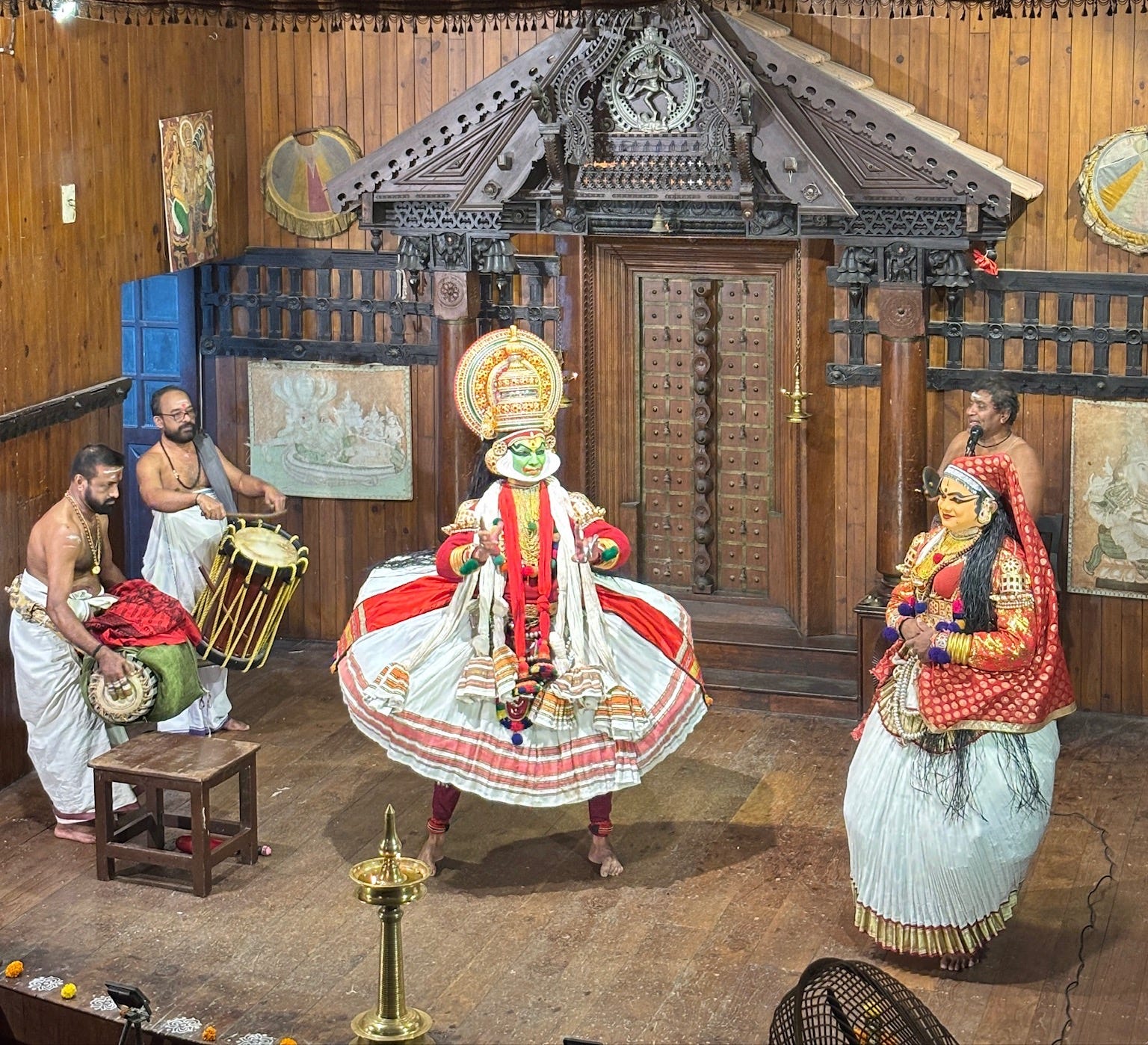
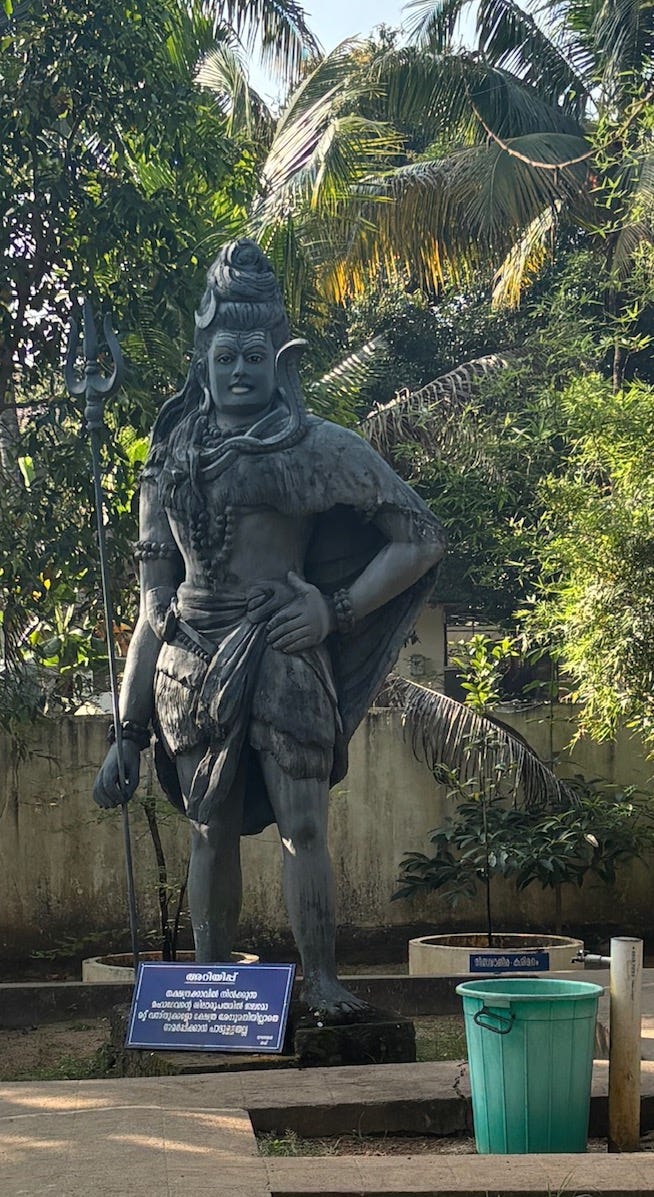
We moved on to a quieter part of the lake, near Kumarakom. Our host introduced us to the local food scene. Riding on the back of a motorcycle through the paddy fields to a toddy shop, I felt alive and happy in an uncomplicated manner. Toddy is made from fermented coconut (the state has a monopoly on selling any other kind of liquor). We had dosa, appam, idli, vada, fish curry (Z only), various other types of curries (I could never be a “food writer”). In the market, I forced myself to look at the slaughtered chickens and the fish still flapping around, half-alive. This is reality. A severed head of a buffalo. We bought lengths of white cloth to cover our knees when we entered a temple dedicated to Shiva bare-chested. Temple visitors can pay a young woman with a mandolin to insert their names into her hymns to the Lord or go pray at the tree that corresponds to their horoscope.
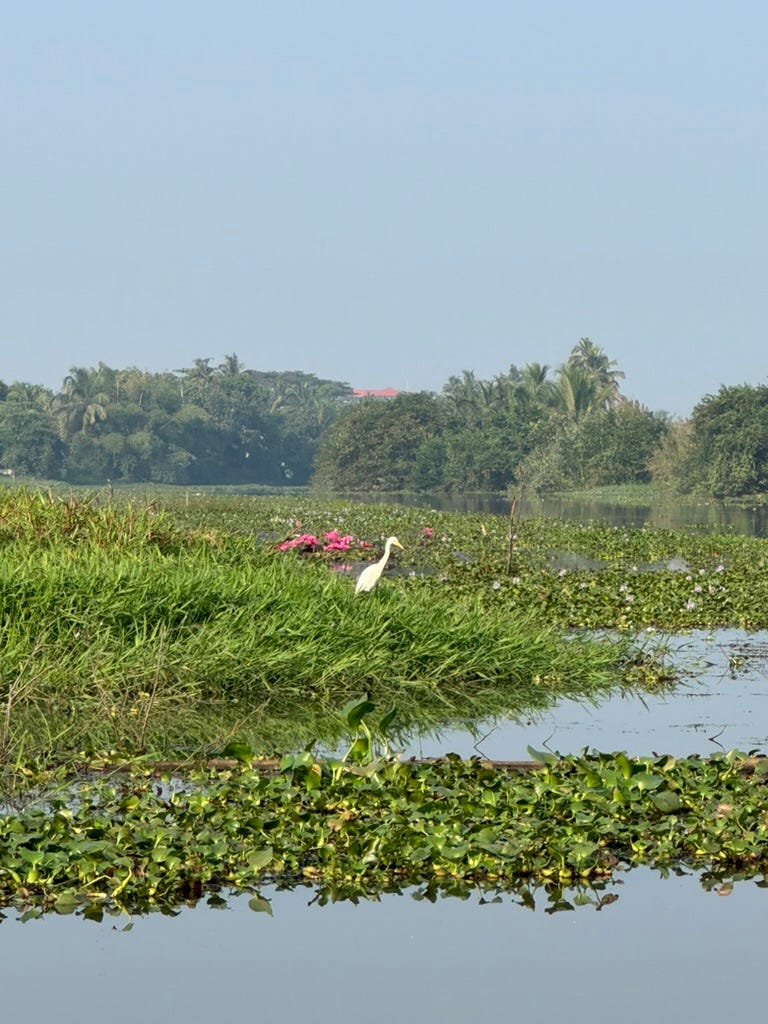
Two teenage boys took us for a boat ride at dawn and showed us their village, including a temple dedicated to the anti-caste reformer Shree Narayana Guru. My favourite part was the birds. Kochi was dominated by crows: smart but rather crass. The backwaters held space for dimmer-witted folk. I was surprised at how similar the bird life was to that in Southern Africa: bee-eaters, hornbills, kingfishers, jacana, egrets, herons, fish eagles, bulbuls… but then I realised it made total sense, since India and Africa used to be joined at the hip. The valence of time feels different here. What is a year, or a thousand years, when we’ve barely scratched the surface of Kali Yuga?
Erotomaniacs often have a thing for birds or other winged beings, like Nabakov with his butterflies. The association with freedom is obvious, but freedom from what? The connection with hubris is ancient as well.
Modernity is the flame leading the moth away from the moon. The moth is us. The moon is, for lack of a better word, God.
When David Bowie was asked in an interview if he engaged in any form of worship, he replied that he loved life.
I observed the stray dogs cavorting around and thought of my dogs back home as almost-prisoners. It’s bad enough to inflict an atomised nuclear family on a child, but on an animal?
The title of this post invites comparison to C.S. Lewis’s Mere Christianity and Agamben’s “bare life”. On why mere Christianity isn’t good enough, I’ll quote J. Krishnamurthi:
When you call yourself an Indian or a Muslim or a Christian or a European, or anything else, you are being violent. Do you see why it is violent? Because you are separating yourself from the rest of mankind. When you separate yourself by belief, by nationality, by tradition, it breeds violence. So a man who is seeking to understand violence does not belong to any country, to any religion, to any political party or partial system; he is concerned with the total understanding of mankind.
Note the manipulative usage of the word “violent”. (Blame the ladies of the Theosophical Society.) I’d suggest “aggression”, which is not always unwarranted. Any credible self-assertive stance contains a hint of aggression. Don’t tread on me, as our friends from the South like to say. Alan Watts reported a conversation he had with C.G. Jung on lesbianism, in which the Swiss mind doctor pointed out how swans engage in the most elaborate play-battles before mating. Mars precedes Eros. A duality is created so it can be resolved. Outward tension masks internal agreement. Perhaps that is why heterosexuals need culture/religion: to furnish a cross-sex vocabulary of internal understanding. (Gays can get by on a gentleman’s agreement.)
As for Agamben, he offered a useful Covid-era antidote to technocratic fantasies of control, but it is equally irresponsible to go around emphasising that man is primarily a political animal. I prefer Strauss’s formulation: “man is the animal who wishes to have the cake and to eat it.”
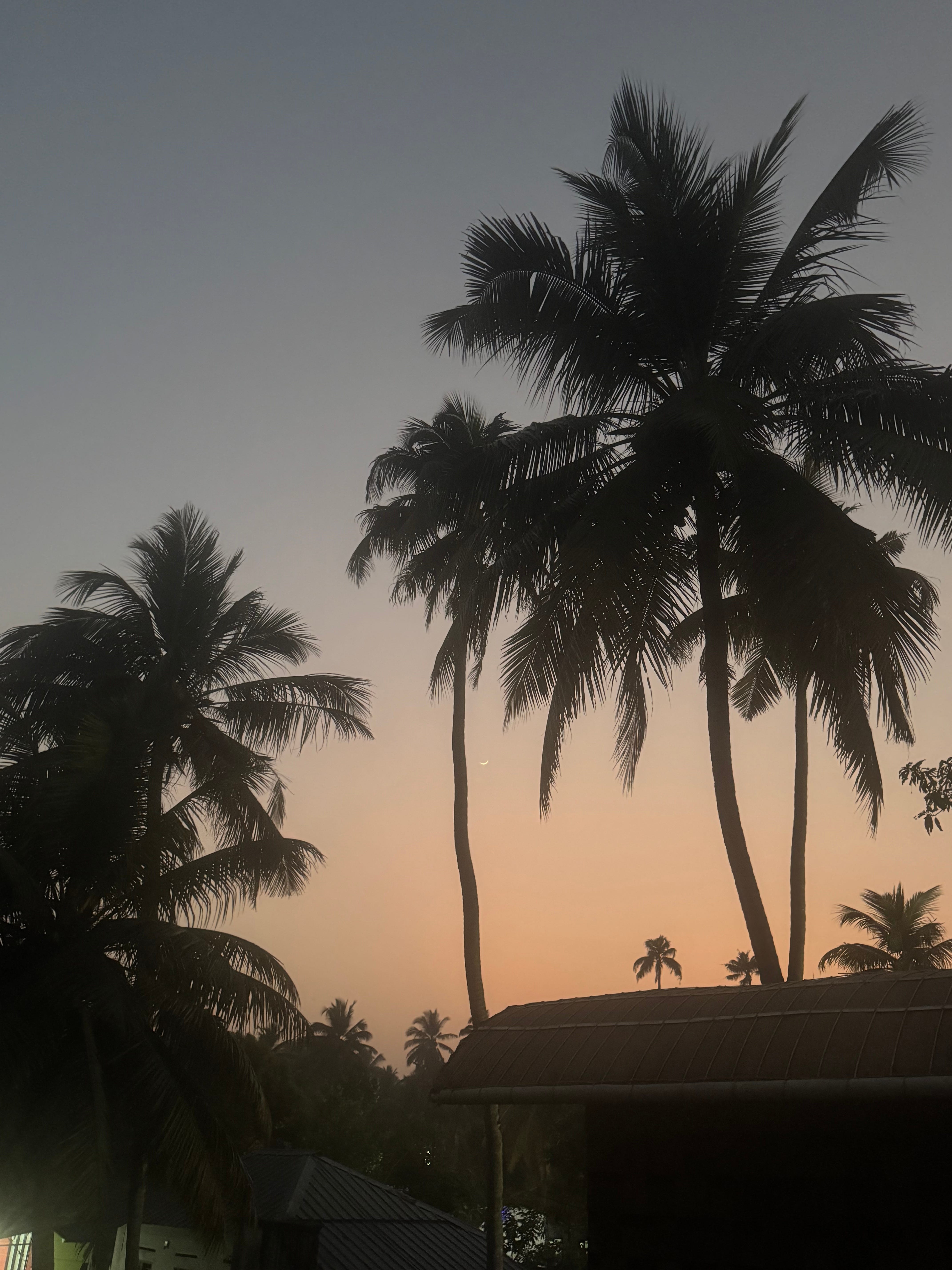
Apart from the natural wonders, I miss the names and faces of gods adorning even the humblest establishments: Mahalakshmi Tailors, Sree Ganesh Sweets and my personal favourite, The Infant Jesus Two-Wheel Rentals. The streets of London are largely devoid of divinity.
Compare Diarmaid MacCulloch’s description of spiritual arrangements in the Occident:
The laity, generally, also wanted prayer because the Western church was developing a particular view of the afterlife in which it is no longer that simple binary. It is not just heaven and hell. There is a state in the middle, purgatory, which is a wonderfully useful way to characterize the afterlife because purgatory is where you can go on being purged of your sins.
You do that with the help of your friends and the clergy in their prayers, particularly in the Mass. Purgatory is a big thing here. Cathedrals are full of altars, just like abbey churches. Look around them, and you see the innumerable side chapels there. These are factories of prayer, and that is worth spending money on. And hurrah, they did because we are left with this amazing legacy of wonderful buildings.
I’ll write about how visiting Kerala challenged my ideas about capitalism, socialism and development in a future post.
I must admit that I have never been much of a fan of the “battle” model of heterosexuality. Conventionally, sex in this model happens after the man has won, and I quite like sex but I’ve never been especially fond of pretending to lose. Not that I have to worry about any of this in the private sub-society of my marriage, mind you, but it was a source of some frustration back when I was single.
I am told that Nabokov always insisted that his butterflies were just butterflies. He was an entomologist, as you may know. Mind you, I’m inclined to interpret this as saying that they were, to him, “butterflies” as he understood them—with sufficient complexity that they could not be reduced to simple symbolism. More like a rich signifier than a non-signifier.
My own thesis was on water, and when it shows up in my writing it means something, but a big part of what it means might indeed be well described, in a sense, as “water.”
But he said neurosis. I will watch it again because even quaker church is time expensive and i might have to start stealing to live. You would have to write the Religion is the slow hallucination movement. That is how it is for me I doodle my freest like Dali's notebook sketches if you have seen those, during quiet meeting. I cannot generalize my experience to the rest... honestly you really think OCD sufferers might be having twisted visions to behave in that way? You could be right. I am asking folks How craaazy are you? Electriclightorchestra things are nuts.